Forex for Medical Treatment Abroad

Forex for Medical Treatment Abroad: RBI Rules, LRS Limit, Documents & Complete Process (2026 Guide)

When medical treatment abroad becomes necessary, time is critical.

But so is compliance.

Many families don’t realize that sending money abroad for treatment is regulated under Indian law — and incorrect documentation can delay urgent hospital payments.

This guide explains everything clearly, legally, and completely.


What Is Forex for Medical Treatment Abroad?

Forex for medical treatment abroad refers to foreign currency or international remittance sent from India to pay for overseas hospital bills, medical procedures, consultation fees, or related treatment expenses.

Under RBI regulations, medical remittance is permitted under the Liberalised Remittance Scheme (LRS), allowing an Indian resident to remit up to USD 250,000 per financial year, subject to documentation and compliance requirements under FEMA.


What Is the Maximum Limit for Medical Remittance from India?

The maximum outward remittance allowed for medical treatment abroad is:

USD 250,000 per financial year per individual under LRS.

This limit includes all purposes combined such as education, travel, investment, and medical expenses.


What Documents Are Required for Medical Forex?

To send money abroad for medical treatment, you typically need:

  • Passport copy

  • PAN card

  • Hospital estimate

  • Doctor’s prescription

  • Form A2 (FEMA declaration)

  • LRS declaration

Incomplete documentation may delay approval.


Can Medical Remittance Exceed USD 250,000?

Yes, in exceptional medical emergencies.
Authorized Dealers may process higher amounts with:

  • Hospital proof

  • Strong documentation

  • Regulatory review

  • Possible RBI approval


How Should Hospital Payments Be Made?

The safest and most compliant way to pay for overseas medical treatment is:

  • Direct wire transfer to hospital

  • Forex card for small expenses

  • Limited foreign currency notes (within RBI cash limit)

Large hospital bills should not be paid in cash.


1. Is Sending Money Abroad for Medical Treatment Legal?

Yes.

Under the Foreign Exchange Management Act (FEMA), medical treatment abroad is classified as a permissible current account transaction.

It is regulated by the Reserve Bank of India under the Liberalised Remittance Scheme (LRS).

This means:

✔ You are legally allowed to remit funds
✔ But within prescribed limits
✔ With mandatory documentation


2. What Is the Maximum Amount Allowed for Medical Treatment Abroad?

Under LRS:

USD 250,000 per financial year (April–March) per individual.

This is not a separate “medical limit.”

It includes all purposes combined.

LRS Limit Includes:

Purpose Included in USD 250,000?
Medical treatment Yes
Education Yes
Travel Yes
Investment Yes
Gifts abroad Yes

If part of your limit has already been used (for example, education remittance), the available balance reduces.


3. Can You Exceed USD 250,000 for Critical Treatment?

In exceptional cases:

Authorized Dealers may process higher remittance if:

  • Hospital estimate exceeds LRS limit

  • Strong medical documentation is provided

  • Case justification is clear

  • Additional RBI approval is obtained (if required)

This is case-specific and not automatic.


4. Who Can Send the Money?

The remitter can be:

  • The patient

  • Parent

  • Spouse

  • Legal guardian

  • Close family member

Funds can be transferred directly to:

  • Foreign hospital

  • Medical institution

  • Overseas doctor

Direct hospital remittance is recommended for large payments.


5. Documents Required for Medical Forex

Authorized Dealers must comply with FEMA and KYC regulations.

Mandatory Documentation

Document Why It Is Required
Passport copy Identity verification
PAN card Tax tracking
Visa copy (if available) Travel validation
Confirmed ticket Travel proof
Hospital admission letter Treatment confirmation
Hospital cost estimate Amount justification
Doctor’s prescription Medical necessity
Form A2 FEMA declaration
LRS declaration Annual limit tracking

Incomplete documentation may delay processing.


6. What Is Form A2?

Form A2 is a FEMA declaration confirming:

  • Purpose of remittance

  • Amount requested

  • Compliance with RBI regulations

  • Source of funds

It is mandatory for outward remittance.

Reference: RBI Master Direction – Reporting under FEMA.


7. Is TCS Applicable on Medical Remittance?

Yes, but typically at lower rates than leisure travel remittance.

Important:

TCS collected is adjustable against your income tax liability when filing ITR.

Always check latest CBDT circulars for updated rates.


8. How Much Cash Can You Carry?

RBI guidelines generally allow:

  • Up to USD 3,000 in foreign currency notes per trip

  • Remaining amount via:

    • Bank wire transfer

    • Forex card

    • Bank draft

Large hospital bills should NOT be paid in physical currency.

Direct transfer ensures:

  • Traceability

  • Compliance

  • Insurance documentation clarity


9. Can an Attendant Carry Forex?

Yes.

Foreign exchange can be issued for:

  • Patient

  • One attendant (or more if medically justified)

Attendant expenses fall under travel allocation within LRS.


10. Recommended Payment Structure for Medical Travel

Expense Best Payment Mode
Hospital advance Direct wire transfer
Surgery charges Direct transfer
Medicines Forex card
Local transport Forex card / small cash
Emergency Limited currency notes

Avoid excessive cash carriage.


11. What Happens If Treatment Costs Increase Abroad?

If hospital cost exceeds estimate:

  • Fresh documentation required

  • Additional remittance processed

  • Subject to remaining LRS balance

  • May require additional compliance review

Plan buffer accordingly.


12. What If You Do Not Follow RBI Rules?

Violations under FEMA may lead to:

  • Monetary penalties

  • Investigation

  • Compounding proceedings

Always use licensed, RBI-authorized entities.


13. Who Is Legally Allowed to Provide Medical Forex?

Only:

  • Authorized Dealer Category I Banks

  • Authorized Dealer Category II

  • Full-Fledged Money Changers (FFMC)

Unregulated forex operators are illegal.


Why Choose Xotik for Medical Forex Remittance?

Medical remittance is not routine travel forex.

It requires precision, documentation accuracy, and regulatory compliance.

At Xotik Travel and Forex Pvt. Ltd., we provide:

✔ RBI-Compliant Processing

All transactions strictly follow RBI and FEMA norms.

✔ Direct Hospital Wire Transfers

Secure, traceable remittances to international medical institutions.

✔ Documentation Assistance

Support with Form A2, LRS declaration, and hospital paperwork.

✔ Transparent Forex Rates

No hidden markups. No airport-level pricing.

✔ Attendant Forex Arrangement

Compliant allocation for accompanying family members.

✔ Priority Handling for Urgent Cases

We understand medical urgency.

When health is the priority, compliance should not be a complication.


Step-by-Step: Arrange Medical Forex with Xotik

  1. Share hospital estimate

  2. Provide passport + PAN

  3. Submit required declarations

  4. Choose payment mode

  5. Funds remitted securely

Our team ensures smooth processing.


Frequently Asked Questions (Medical Forex from India)

1. Is sending money abroad for medical treatment legal in India?

Yes. Under the Foreign Exchange Management Act (FEMA), medical treatment abroad is classified as a permissible current account transaction regulated by the Reserve Bank of India under the Liberalised Remittance Scheme.


2. Does medical remittance count toward the LRS limit?

Yes. Medical remittance is included within the USD 250,000 annual limit under LRS. It is not a separate category.


3. Can I send money directly to a foreign hospital?

Yes. Direct hospital remittance is the safest and most recommended method for large medical payments abroad.


4. Is TCS applicable on medical remittance?

Yes. Tax Collected at Source (TCS) may apply depending on prevailing tax rules. However, the amount collected can be adjusted against your income tax liability while filing your return.


5. Can parents remit money for their child’s treatment abroad?

Yes. Parents can remit funds under their own LRS limit for the medical treatment of a dependent child.


6. Can more than USD 250,000 be remitted for emergency treatment?

In exceptional cases, higher remittance may be permitted subject to strong documentation and regulatory review by the Authorized Dealer and possibly RBI approval.


7. How much cash can I carry for medical travel?

RBI guidelines generally permit up to USD 3,000 in foreign currency notes per trip. Larger payments must be made via banking channels.


8. Can an attendant also receive forex allocation?

Yes. An attendant accompanying the patient can be issued forex within permissible limits.


9. What happens if I violate FEMA rules?

Violations may lead to monetary penalties and regulatory proceedings. Always transact through RBI-authorized dealers.


10. Why should I use an RBI-authorized forex dealer for medical remittance?

RBI-authorized dealers ensure:

  • Legal compliance

  • Proper reporting

  • Secure transfers

  • Transparent documentation

  • Avoidance of penalties


Official References

  • Reserve Bank of India – Master Direction on LRS

  • Foreign Exchange Management Act

  • Current Account Transactions Rules, 2000

  • CBDT TCS Circulars


Final Word

Medical travel is emotionally overwhelming.

The right forex partner ensures:

✔ Legal compliance
✔ Transparent pricing
✔ Secure transfer
✔ Timely processing

If you require foreign exchange for medical treatment abroad, speak with the compliance team at Xotik today.

Let us handle the regulations — so you can focus on recovery.

What Documents Are Required to Buy Forex in India? (RBI & LRS Complete Guide)

What Documents Are Required to Buy Forex in India? (RBI & LRS Complete Guide)

Why Buying Forex in India Is a Regulated Transaction — Not Just a Purchase

Buying foreign currency in India is not like exchanging cash at a mall.

It is a cross-border financial transaction governed by:

  • FEMA (Foreign Exchange Management Act)

  • RBI guidelines

  • LRS (Liberalised Remittance Scheme)

  • AD-II authorized dealer framework

Every forex transaction is:

  • Reported

  • Recorded

  • Linked to your PAN

  • Counted toward annual remittance limits

Understanding documentation is not optional.
It is legally mandatory.

This guide explains:

  • Mandatory documents

  • Conditional documents

  • Student & business variations

  • LRS limits explained clearly

  • Rejection triggers

  • Compliance logic

  • Advanced edge cases

Everything in one place.


The Legal Framework Behind Forex Transactions in India

Forex issuance in India operates under:

FEMA

Controls all foreign exchange transactions.

RBI LRS

Allows resident Indians to remit up to USD 250,000 per financial year for permissible purposes.

Authorized Dealers (AD-II)

Entities like Xotik Travel & Forex Pvt. Ltd. are licensed to process forex transactions legally.

Documentation exists to ensure:

  • You are eligible

  • Limits are not exceeded

  • Purpose is permissible

  • Transaction is compliant


Core Documents Required to Buy Forex in India

These apply to most tourist travelers.


1️⃣ Valid Indian Passport (Primary Identity & Eligibility Proof)

Purpose:

  • Confirms residency status

  • Verifies name consistency

  • Establishes travel eligibility

Requirements:

  • Must be valid

  • Name must match ticket

  • Copy required

Passport is the foundational compliance document.


2️⃣ Confirmed International Air Ticket

Purpose:

  • Validates travel intent

  • Determines date-based eligibility

  • Confirms destination

Forex cannot be issued for speculative travel.

No ticket = no travel purpose validation.


3️⃣ PAN Card (Mandatory for Reporting Under LRS)

PAN is critical because:

  • All forex transactions are reported

  • LRS tracking is PAN-linked

  • High-value transactions require tax identity

Without PAN:

  • Most dealers cannot process transaction

  • Annual remittance limit cannot be tracked

PAN is not optional.


4️⃣ Valid Visa (If Applicable)

Required when:

  • Destination country requires prior approval

  • Travel category impacts limit (work/study)

For visa-on-arrival countries:

  • Ticket may suffice

Visa confirms legal travel intent.


5️⃣ A2 Declaration Form (Mandatory RBI Compliance Document)

This is often misunderstood.

The A2 Form:

  • Declares purpose of remittance

  • Confirms LRS compliance

  • Legally binds the traveler

You declare that:

  • Forex is within limit

  • Purpose is permissible

  • No FEMA violation exists

This is not a casual form.
It is a compliance declaration.


🔎 LRS EXPLAINER BLOCK (Important)

What Is LRS and Why It Matters When Buying Forex?

LRS (Liberalised Remittance Scheme) allows:

Resident Indians to remit up to USD 250,000 per financial year for:

  • Travel

  • Education

  • Medical

  • Investments

  • Family maintenance

When you buy forex:

  • The transaction counts toward your LRS usage

  • It is recorded under your PAN

  • It reduces your annual limit

Example:

If you remit USD 100,000 for education and buy USD 20,000 for travel, your remaining limit becomes USD 130,000 for that financial year.

This is why PAN is mandatory.


LRS Limits Specific to Travel

Under Basic Travel Quota (BTQ):

You may purchase foreign exchange for:

  • Tourism

  • Personal travel

  • Business travel

  • Medical travel

Exact limits depend on purpose.

However, total remittance must remain within USD 250,000 annual cap.


Student Travelers: Additional Documentation Required

Students may need:

  • University admission letter

  • I-20 or CAS document

  • Fee invoice

  • Living expense estimate

Education remittance also falls under LRS.

Documentation verifies:

  • Purpose legitimacy

  • Amount reasonableness


Business Travelers: What Changes?

If forex is bought for business travel:

May require:

  • Company letter

  • Business purpose declaration

  • Corporate travel confirmation

However, many business travelers use personal LRS allocation.


Forex Card vs Cash: Documentation Difference

Documentation largely remains identical.

However:

Forex cards require:

  • Card agreement

  • Signature verification

  • Activation compliance

Cash-only purchase is simpler.

Reloading a forex card later still requires:

  • LRS compliance

  • PAN validation


Edge Cases Most Blogs Ignore

Can You Buy Forex Without a Ticket?

Generally no.

Dealers require confirmed travel proof.


Can Parents Buy Forex for Children?

Yes, but:

  • Minor passport required

  • PAN requirements apply

  • Guardian declaration required


What If PAN Name Does Not Match Passport?

Transaction may be delayed.

Name consistency is crucial.


What Happens If You Exceed LRS Limit?

Dealer cannot process.

Banks track LRS centrally.

Attempting to split across dealers does not bypass system.


Common Reasons Forex Requests Get Rejected

  1. PAN mismatch

  2. Incomplete A2 form

  3. Expired passport

  4. Ticket mismatch

  5. Already exhausted LRS limit

  6. Suspicious transaction pattern

Pre-checking eliminates these risks.


Timeline: When Should You Submit Documents?

Ideal window:

2–5 days before travel.

Benefits:

  • Allows rate lock

  • Prevents airport premium purchase

  • Avoids compliance delay

Last-minute purchase increases cost and stress.


The Smart Compliance Checklist

Before approaching a dealer, keep:

✔ Passport copy
✔ PAN copy
✔ Confirmed ticket
✔ Visa (if required)
✔ Destination details
✔ Purpose clarity

Prepared travelers experience same-day issuance.


Why Structured Dealers Reduce Risk

Authorized entities like Xotik Travel & Forex Pvt. Ltd.:

  • Verify documentation thoroughly

  • Guide LRS declaration

  • Clarify limits

  • Ensure RBI compliance

  • Reduce rejection probability

Forex is not just about rates.
It is about legal smoothness.


The Final Structural Truth

To buy forex in India, you need:

Mandatory:

  • Passport

  • PAN

  • Ticket

  • Visa (if applicable)

  • A2 Declaration

Conditional:

  • Admission letter (students)

  • Business confirmation (corporate travel)

  • Minor guardian declaration

Underlying requirement:
LRS compliance under USD 250,000 annual limit.

Understanding documentation prevents:

  • Delay

  • Rejection

  • Compliance flags

  • Airport urgency pricing

Plan early.
Prepare documents.
Transact legally.

Airport Forex vs Authorized Forex Dealers: The Real Cost & Structural Difference Explained

Airport Forex vs Authorized Forex Dealers: The Real Cost & Structural Difference Explained

Why This Comparison Is More Important Than Most Travelers Think

Most Indian travelers reduce forex to one thought:

“I’ll exchange money wherever it’s convenient.”

But currency exchange is not a convenience decision.
It is a rate structure decision.

The difference between:

  • Airport forex counters
    and

  • RBI-authorized forex dealers

Is not just price.

It’s:

  • Margin structure

  • Urgency pricing

  • Liquidity sourcing

  • Rate locking capability

  • Product flexibility

  • Regulatory clarity

And over a ₹2–5 lakh travel budget, small differences compound fast.

This guide breaks down the entire mechanism, not just surface-level advice.


The Structural Difference (Not Just the Price Difference)

Both airport counters and city forex dealers are licensed.

But they operate under different economic pressures.

Understanding that changes everything.


What Is Airport Forex (Operational Model)

Airport forex counters operate in:

  • High-rent zones

  • Limited-competition terminals

  • Time-pressure environments

  • 24/7 availability models

They are designed for:

  • Immediate demand

  • Missed planning

  • Emergency conversion

  • Arrivals without local currency

Their pricing includes:

  • Location premium

  • Staffing premium

  • Urgency premium

Not fraud.
Not illegality.
Just structure.


What Is an Authorized Forex Dealer (Operational Model)

Authorized dealers:

  • Operate under RBI AD-II licensing

  • Compete with banks & private dealers

  • Allow pre-booking

  • Provide structured forex products

  • Operate in competitive environments

Entities like Xotik Travel & Forex Pvt. Ltd. function in this structure — where pricing is market-driven, not urgency-driven.


The Rate Structure Explained (The Part Most Blogs Skip)

Let’s go deeper than “airport is expensive”.

Forex pricing has three components:

1️⃣ Interbank Rate
2️⃣ Dealer Margin
3️⃣ Operational Cost Layer

Airport counters typically add:

  • Higher margin

  • Higher operational overhead

  • Lower competition pressure

City dealers add:

  • Competitive margin

  • Lower overhead

  • Negotiation flexibility

That’s the structural difference.


Real Margin Impact Example (Math That Matters)

Let’s assume:

Interbank USD rate = ₹83.00

Authorized dealer rate = ₹84.00
Airport rate = ₹86.00

On $3,000:

Authorized dealer: ₹2,52,000
Airport counter: ₹2,58,000

Difference: ₹6,000

On $5,000 → ₹10,000+ difference

This is not “minor”.
It’s structural.


Why Airport Forex Appears Convenient (Psychological Factor)

Airports exploit one factor:

Decision fatigue.

At departure:

  • You’re anxious

  • You’re time-bound

  • You don’t compare

At arrival:

  • You need immediate currency

  • You feel stuck

Pricing adjusts for this behavior.

It’s behavioral economics, not deception.


Transparency & Negotiation Power

Airport counters:

  • Fixed digital boards

  • No negotiation

  • No comparison

Authorized dealers:

  • Quote-based pricing

  • Rate locking

  • Bulk negotiation

  • Competitive environment

Competition reduces margin.
Airports have limited competition.


Rate Locking — The Hidden Advantage

Airport forex:

  • Spot rate only

  • No future protection

Authorized dealer:

  • Book today, collect later

  • Lock against volatility

In volatile currency periods, this matters significantly.


Product Flexibility (Often Ignored)

Airport counters:

  • Mostly cash

  • Limited card explanation

  • Minimal advisory

Authorized dealers:

  • Forex cards

  • Multi-currency cards

  • Cash + card mix

  • Reload planning

  • Usage guidance

Flexibility reduces future cost.


Compliance & LRS Awareness

Both operate legally.

But authorized dealers typically:

  • Explain RBI limits

  • Clarify LRS caps

  • Provide documentation guidance

  • Structure transactions properly

Airport counters prioritize speed over advisory.


When Airport Forex Is Actually the Right Choice

Airport forex makes sense when:

✔ You forgot to plan
✔ You need small emergency cash
✔ Your card failed
✔ You miscalculated

It does NOT make sense for:

❌ Full travel forex
❌ Large volume exchange
❌ Rate optimization
❌ Planned travel


Forex Cards: The Hidden Cost Layer

Many travelers assume:

“Forex card rate same everywhere.”

Not true.

Forex card cost includes:

  • Load margin

  • Reload margin

  • ATM withdrawal fee

  • Cross-currency markup

Airport cards often:

  • Have standard retail margins

  • Limited explanation

  • No comparison

Authorized dealers:

  • Clarify fee structures

  • Offer competitive loads

  • Structure reload planning

Total cost matters more than spot rate.


Liquidity & Currency Availability

Airports:

  • Limited denominations

  • Limited currency stock

  • Higher spreads on exotic currencies

City dealers:

  • Better availability

  • More predictable supply

  • Competitive spreads


What Happens When You Exchange Large Amounts at Airports

Large transactions at airport counters:

  • Trigger compliance checks

  • Offer no negotiation leverage

  • Lock you into premium rates

Large transactions in city:

  • Often qualify for better rate

  • Allow negotiation

  • Provide structured documentation


The Hybrid Strategy (Smart Traveler Model)

The optimal strategy is not extreme.

✔ Convert 80–90% through authorized dealer
✔ Keep small emergency cash for airport
✔ Avoid last-minute bulk exchange
✔ Plan 2–5 days before travel

Planning eliminates urgency pricing.


Behavioral Insight (Why Most People Overpay)

People overpay at airports because:

  • They delay forex planning

  • They underestimate rate impact

  • They assume difference is small

  • They think ₹1 doesn’t matter

₹1 difference × large volume = silent cost.


Why This Article Matters

Because forex cost doesn’t show up as a bill.

It disappears inside exchange rates.

And most travelers never calculate it.


The Final Structural Truth

Airport forex is:

Convenience-based pricing.

Authorized forex dealers are:

Competition-based pricing.

Neither is illegal.
Neither is unethical.

One is optimized for urgency.
One is optimized for planning.

Choose based on when you decided to plan.

Frequently Asked Questions: Airport Forex vs Authorized Forex Dealers


1. Is airport forex always more expensive than authorized forex dealers?

In most cases, yes. Airport forex counters usually apply higher margins because they operate in high-rent, urgency-based environments. Authorized forex dealers operate in competitive markets, which typically results in better exchange rates.


2. How much more expensive is airport currency exchange compared to city forex dealers?

The difference can range from ₹1 to ₹3 per currency unit, sometimes more. On $3,000–$5,000, this can result in ₹3,000–₹10,000 extra cost depending on market conditions.


3. Are airport forex counters legal and regulated in India?

Yes. Airport forex counters operate under RBI authorization and are fully legal. The difference is not regulatory—it is structural pricing based on location and urgency.


4. Can I negotiate forex rates at airport counters?

Generally, no. Airport counters usually offer fixed display rates. Authorized forex dealers in cities may provide better rates for larger transactions or allow limited negotiation.


5. Is it safe to buy forex from authorized dealers outside the airport?

Yes, provided the dealer is RBI-authorized (AD-II license holder). Always verify the authorization and obtain proper documentation for the transaction.


6. Should I buy all my foreign currency before reaching the airport?

Yes. It is advisable to purchase most of your foreign currency 2–5 days before departure through an authorized forex dealer. Airports should only be used for small emergency amounts.


7. Are forex cards bought at airports more expensive?

Often yes. Forex cards at airports may carry higher load margins and less competitive rates. Authorized dealers typically provide better transparency on card fees and reload costs.


8. Does airport forex offer better rates during emergencies?

No. Airport forex rates do not improve during emergencies. In fact, urgency often removes comparison opportunities, making rates less favorable.


9. What is the smartest way to carry money abroad from India?

The most efficient strategy is a mix of:

  • Majority via authorized forex dealer (cash or forex card)

  • Small emergency currency at airport

  • Backup international credit card


10. Why do people still use airport forex if it is more expensive?

Because it is convenient. Many travelers delay planning or underestimate rate differences. Airport forex survives on urgency-based demand, not competitive pricing.

How RBI & FEMA Rules Impact Indian Travelers Abroad

How RBI & FEMA Rules Impact Indian Travelers Abroad

A System-Level Guide to Money, Compliance, Cards, Limits & Stress-Free International Travel


Why This Is the Most Misunderstood Topic in Indian Travel

Most Indian travelers believe RBI and FEMA rules are:

  • For exporters and importers

  • For businesses and NRIs

  • For banks, not tourists

This belief is structurally incorrect.

The moment an Indian resident:

  • Buys foreign currency

  • Loads a forex card

  • Swipes a card abroad

  • Receives a foreign refund

  • Returns with unused forex

they are operating inside RBI- and FEMA-governed systems.

The rules don’t announce themselves.
They operate silently through limits, blocks, delays, and denials.

This guide explains how those systems actually affect real travelers, not how the law is written.


The Two Authorities That Control Every Rupee You Spend Abroad

The Role of the Reserve Bank of India (RBI)

For travelers, RBI decides:

  • Who is allowed to sell you foreign exchange

  • Which payment instruments are permitted

  • How much foreign exchange can be accessed

  • How international card usage is regulated

RBI does not interact with you directly.
It programs the financial rails your money must run on.


What FEMA Really Is (In Practical Terms)

FEMA (Foreign Exchange Management Act) is not about punishment.
It is about control of foreign exchange movement.

If money:

  • Leaves India

  • Enters India

  • Is held in a foreign currency

FEMA applies — regardless of whether the purpose is business or tourism.

There is no tourist exemption in FEMA.


The Single Principle FEMA Uses (Everything Else Follows)

FEMA is built on one idea:

Foreign exchange is permitted for defined purposes, within defined limits, through defined channels.

Problems arise when travelers:

  • Exceed limits unknowingly

  • Use the wrong channel

  • Combine instruments incorrectly

  • Leave forex cycles open after travel

Not because they intended wrongdoing —
but because systems don’t care about intent.


How RBI & FEMA Shape the Entire Travel Lifecycle

Google models travel queries as a lifecycle.
So do RBI and FEMA.

Let’s align them.


1️⃣ Before Travel: Buying Forex Is a Regulated Act

Who You Buy Forex From Is Not a Preference — It’s a Rule

Under RBI regulations, foreign exchange can only be sold by:

  • Authorized Dealers (banks)

  • RBI-licensed money changers

  • Approved forex providers

Buying forex from:
❌ friends
❌ informal agents
❌ “cheaper” sources

creates non-traceable foreign exchange, which is where FEMA risk begins.

This is why regulated providers like Xotik Travel & Forex Pvt. Ltd. exist — not to upsell, but to keep travelers inside permitted channels.


How Much Forex Can You Buy (And Why It’s Tracked)

RBI doesn’t set one flat limit.
It sets purpose-based allowances.

Tourism has a defined annual ceiling.

Key insight:

Buying smaller amounts from multiple providers does NOT bypass FEMA.
Banks and dealers report cumulative exposure.

This is why unexplained repeat purchases sometimes get blocked.


2️⃣ During Travel: Why Cards Behave Differently Abroad

Why Indian Cards Are Flagged More Often Overseas

Card failures abroad are rarely “technical”.

They are caused by:

  • Geo-risk profiling

  • Spend-pattern deviation

  • Currency-routing mismatches

  • RBI-mandated compliance checks

  • Network-level fraud heuristics

In other words:

FEMA is enforced by software, not officers.

The traveler only sees “Transaction Declined”.


Why Forex Cards Trigger Fewer Problems

Forex cards:

  • Are pre-cleared for foreign usage

  • Have capped exposure

  • Separate risk from savings accounts

  • Match RBI’s preferred control model

This is why forex cards are structurally more compliant, not just convenient.


3️⃣ Cash Usage Abroad: Legal but Not Casual

RBI allows cash — but with expectations.

Cash:

  • Is harder to trace

  • Cannot be protected if lost

  • Triggers scrutiny at higher volumes

FEMA does not ban cash.
It assumes proportionate, purpose-aligned use.

Carrying too little cash causes friction.
Carrying too much creates exposure.


4️⃣ Returning to India: The Phase Most Travelers Ignore

Unused Foreign Currency Is Not “Free Money”

Under FEMA:

  • Residents may retain a small amount indefinitely

  • Larger amounts must be reconverted or deposited

  • Foreign currency is not meant to be hoarded

Ignoring this:

  • Doesn’t cause instant penalties

  • Creates long-term compliance ambiguity

This is why travelers suddenly face questions months later — not at the airport.


5️⃣ Refunds, Reversals & Foreign Credits (Silent FEMA Triggers)

These situations catch travelers off-guard:

  • Airline refunds after return

  • Hotel security deposits released later

  • Foreign platform refunds

These are foreign exchange inflows.

Banks must:

  • Classify them

  • Report them

  • Convert or hold them appropriately

When documentation is unclear, funds get delayed or blocked.

This feels unfair — but it is procedural compliance, not suspicion.


Why RBI & FEMA Never “Explain Themselves” to Travelers

A critical system insight:

RBI and FEMA are designed for institutional enforcement, not consumer education.

They assume:

  • Banks enforce limits

  • Authorized dealers guide users

  • Travelers stay within structured channels

This is why:

  • No one explains rules at airports

  • Banks don’t proactively educate

  • Failures feel sudden and personal

They are neither.
They are predictable outcomes of system logic.


The Most Dangerous Myths Indian Travelers Believe

❌ “Tourists don’t fall under FEMA”
❌ “Small amounts don’t matter”
❌ “Forex cards are optional”
❌ “Airport exchange is safest”
❌ “Banks will fix things later”

Every one of these myths leads to friction.


The FEMA-Safe Travel Framework (Memorize This)

A traveler who follows this almost never faces issues:

✔ Buy forex only from authorized providers
✔ Use the right mix: forex card + cash + credit card
✔ Stay within declared purpose limits
✔ Avoid informal currency handling
✔ Close the forex loop after returning

This is not fear-based compliance.
This is travel hygiene.


Why Understanding RBI & FEMA Actually Reduces Travel Stress

Prepared travelers:

  • Experience fewer declines

  • Avoid frozen funds

  • Pay lower hidden costs

  • Return without unresolved balances

  • Never scramble for explanations

Unprepared travelers don’t break laws —
they collide with systems they didn’t know existed.


Where Xotik Fits

A regulated provider like Xotik Travel & Forex Pvt. Ltd. doesn’t “sell forex”.

It helps travelers:

  • Match purpose to instrument

  • Stay within RBI limits

  • Avoid compliance-triggering behavior

  • Move money predictably across borders

That difference becomes visible only when something goes wrong — which is when most people learn FEMA exists.


The Core Insight

RBI and FEMA rules are not obstacles to travel.
They are invisible guardrails.

Travelers who understand them:

  • Move confidently

  • Spend smoothly

  • Avoid silent penalties

  • Return cleanly

Those who don’t aren’t careless —
they’re simply unaware of the system they’re inside.


Frequently Asked Questions: RBI & FEMA Rules for Indian Travelers

Q1. Do RBI and FEMA rules apply to Indian tourists traveling abroad?
Yes. RBI and FEMA rules apply to all Indian residents whenever foreign exchange is purchased, used, carried, or returned — including for tourism. There is no exemption for leisure travel.

Q2. Why do Indian cards get blocked or declined abroad due to compliance?
Indian cards are governed by RBI-mandated risk controls. Unusual locations, spending patterns, currency routing issues, or geo-risk flags can trigger automated declines under compliance systems.

Q3. Is buying forex from friends or informal agents illegal?
Buying forex from unauthorized sources is not permitted under RBI regulations. Such transactions create non-traceable foreign exchange and expose travelers to FEMA compliance risk.

Q4. Are forex cards safer than debit or credit cards for compliance?
Forex cards are structurally aligned with RBI compliance because they are pre-approved for foreign usage, have capped exposure, and are not linked directly to savings accounts.

Q5. Can I keep unused foreign currency after returning to India?
Yes, but only within prescribed limits. FEMA allows limited retention. Excess amounts must be reconverted or deposited within the allowed timeframe.

Q6. Why do refunds from airlines or hotels sometimes get delayed after return?
Such refunds are treated as foreign exchange inflows. Banks must classify, report, and process them under FEMA, which can cause delays if documentation is unclear.

Q7. Do small amounts of foreign currency matter under FEMA?
Yes. FEMA does not operate on the idea of “small doesn’t matter.” Compliance is system-based, not amount-based.

Q8. Why doesn’t anyone explain RBI or FEMA rules at airports?
RBI and FEMA are enforced through banking and financial systems, not traveler briefings. They assume banks and authorized dealers guide customers.

forex card vs credit card

🌍💳 Forex Card vs Credit Card vs UPI Abroad — The Ultimate Indian Traveler’s Guide for 2026 & Beyond

A Hyper-Accurate, Deeply Researched Framework to Choose the Right International Payment Method

Most Indians think traveling abroad is expensive because of flights, hotels, or sightseeing.

But in reality…
You lose the MOST money through the wrong payment method.

● Hidden forex markups
● Double currency conversions
● ATM withdrawal penalties
● DCC traps
● Convenience fees
● Unknown UPI restrictions
● Interest + GST
● Bank rate fluctuations
● Merchant rejection

This guide eliminates ALL these losses.

It is engineered to be:

✔ The most comprehensive Indian guide
✔ Evergreen for 2026 and beyond
✔ The definitive guide for Indian travelers choosing between Forex Card, Credit Card, and UPI Abroad


🧭 FOUNDATION: Understanding the 3 Payment Methods in RBI + Global Network Context

Before comparing them, you must understand:

💠 1. Forex Card (RBI-regulated, preloaded multi-currency card)

Issued by: RBI Authorized Money Changers (Xotik Travel & Forex included)
Runs on: Visa / Mastercard / NXP secure chips
Currencies supported: 15+ world currencies
Limits: Preloaded, controlled
Acceptance: Global POS, ATMs, online
Risk: Near-zero with PIN + 3DS

Forex cards align with RBI’s LRS (Liberalized Remittance Scheme) and are designed specifically for foreign travel.


💠 2. Credit Card (International Transaction Instrument)

Issued by: Banks
Exchange: Daily market rate (not locked)
Markup: 3.5–4%
GST: 18% on markup
Hidden cost: DCC (Dynamic Currency Conversion)
Risk: High if lost
Interest: 24–36% APR if revolving

Banks intentionally hide charges under “international transaction fees.”


💠 3. UPI Abroad (Emerging, country-limited payment system)

Runs via:
NPCI + collaborations with

  • PayNow (Singapore)

  • Neopay (UAE)

  • LankaPay

  • Nepal’s NPI

  • QR integrations in Mauritius

UPI is incredible but NOT globally accepted yet.


💡 WHY THIS DECISION MATTERS MORE THAN EVER IN 2026

Indians traveling abroad increased 6X between 2015 and 2024.
At the same time:

✓ INR is volatile
✓ Credit card markups increased
✓ More countries joined UPI
✓ Forex cards became smarter

Choosing the wrong option can cost you ₹15,000–₹40,000 MORE per trip.

This guide ensures you never overpay again.


🥇 The Definitive Comparison Table (100% India-Specific Accuracy)

This table is engineered to rank as a Featured Snippet:

Feature Forex Card Credit Card UPI Abroad
Exchange Rate Locked ❌ High markup ✔ Bank rate
Forex Markup 0–0.5% ❌ 4–5% None
ATM Withdrawals ₹150–₹200 ❌ ₹500 + 3.5% Not available
Acceptance Worldwide ⭐⭐⭐⭐⭐ ⭐⭐⭐⭐⭐
Safety ⭐⭐⭐⭐⭐ ⭐⭐⭐ ⭐⭐
Budget Control ⭐⭐⭐⭐⭐ ⭐⭐⭐
Fraud Protection High Medium Medium
Refundability High Good Limited
Ideal Use Travel Emergencies Small payments

🔎 THE DEEP DIVE 

Now we break down each method not just technically, but behaviorally, financially, and regionally—because spending abroad is not linear.


🔵 1. FOREX CARD — The Optimal Choice for Indian Travelers

The Most Accurate Explanation Ever Written For Indian Users

✔ Fixed Rate = 100% Predictability

If you load EUR at ₹90 today, tomorrow even if it becomes ₹94 —
you pay nothing extra.

You literally shield yourself from INR depreciation.

✔ Multi-Currency = Perfect for Multi-Country Trips

Load 15 currencies:
USD, EUR, GBP, CAD, AUD, SGD, AED, THB, CHF, JPY…

Europe trip?
Load EUR + CHF
Dubai + Europe?
Load AED + EUR
Thailand + Singapore?
THB + SGD

✔ Works Everywhere Except Rural Cash Markets

  • Hotels

  • Malls

  • Restaurants

  • Taxis

  • Grocery stores

  • Museum tickets

  • Airbnb

  • Attractions

  • Railways

✔ ATM Withdrawals Are Dirt Cheap

₹150–₹200 per withdrawal (flat)

Credit card?
₹500 + 3.5% + interest
= most expensive withdrawal on earth

✔ Zero Link to Your Indian Bank Account

Even if stolen → freeze instantly → no risk.


🔴 2. CREDIT CARD — Use Only for Emergencies / Deposits

❌ Fact: Credit Cards Are the Most Expensive International Method

Breakdown:

  • 3.5% markup

    • GST on markup

    • 1% network fees

    • DCC trick (merchant selects INR)

    • high APR on revolving balances

❌ Perfect for Foreign ATM Disaster

Withdraw $200 → pay ₹2,500 in fees.

✔ When is a credit card good?

  • Hotel security deposits

  • Car rental deposits

  • Upgrades

  • Refundable bookings

  • Lounge access (benefit, not payments)

But never use it for:

❌ Food
❌ Shopping
❌ Activities
❌ Local transport
❌ Online purchases

Because a Forex card does all those things cheaper and safer.


🟢 3. UPI Abroad — Amazing but Limited

UPI is revolutionary, but NOT a replacement for international cards.

✔ Works brilliantly in:

🇸🇬 Singapore
🇦🇪 Dubai
🇲🇺 Mauritius
🇳🇵 Nepal
🇧🇹 Bhutan
🇱🇰 Sri Lanka (partial)

✔ Best Uses Abroad

  • Coffee

  • Small grocery items

  • Local transport (Singapore MRT)

  • Taxis

  • Snacks

  • Supermarkets

❌ But UPI CANNOT replace:

  • Hotels

  • Flights

  • ATMs

  • Museums

  • Rentals

  • Europe/US payments

  • Refundable transactions


🌎 REGION-WISE WINNER 

Region Best Method Why
Europe (29 Schengen nations) Forex Card Multi-currency + avoids insane CC fees
USA Forex Card UPI not accepted, CC expensive
UK Forex Card EUR/GBP loaded, CC fees too high
Dubai Forex Card + UPI UPI accepted almost everywhere
Singapore Forex Card + UPI MRT accepts UPI
Thailand Forex Card Baht card acceptance strong
Japan Forex Card Japan is cash-heavy but CC fees high
Australia/NZ Forex Card Low ATM fees + good acceptance
Mauritius Forex Card + UPI Many merchants now accept UPI

🧠 BEHAVIORAL PSYCHOLOGY: Why Forex Cards Help Indians Spend Smarter

✔ 1. Preloaded → Reduces emotional overspend

You spend only what you load.

✔ 2. A separate card → avoids dipping into emergency funds

Your Indian savings stay untouched.

✔ 3. Rate-locking → removes anxiety

Indians fear “rate fluctuations.”
Forex cards remove that fear permanently.

✔ 4. Visual budgeting → helps families track

Reload only when needed.


💰 REAL COST SCENARIO (Game-Changing Insight)

A family spends ₹2,00,000 abroad.

Using a Credit Card:

Total hidden loss = ₹9,000–₹13,000

Using Forex Card:

Loss = ₹0–₹2,000

Using UPI:

Savings = High, but limited acceptance abroad.

Forex card saves ₹7,000–₹11,000 for an average trip.


🧠 FAQ

Google LOVES FAQ for Featured Snippets.

❓ Should I carry cash?

Yes — $100 or €100 only.

❓ Can I use UPI in Europe?

No. Europe does NOT support UPI QR.

❓ Which forex card is best?

An RBI-authorized multi-currency card
➡ like Xotik Forex Card.

❓ Is credit card ever better?

For deposits only.

❓ Can I load forex card online?

Yes — instant reload through issuer portal.


✈️ Xotik Travel & Forex — India’s Trusted Payment Partner for Global Travel

We provide:

✔ Multi-currency Forex Cards
✔ Best INR-to-Foreign Exchange Rates
✔ Currency Home Delivery
✔ RBI Authorisation
✔ Zero Hidden Charges
✔ Visa Assistance
✔ Travel Insurance
✔ UPI-Compatible Travel Destinations
✔ 24×7 Support

📞 +91 9257107667
🌐 www.xotik.in

RBI Licenses and Accreditations What Sets Xotik Apart Updated 1

RBI Licenses and Accreditations: What Sets Xotik Apart

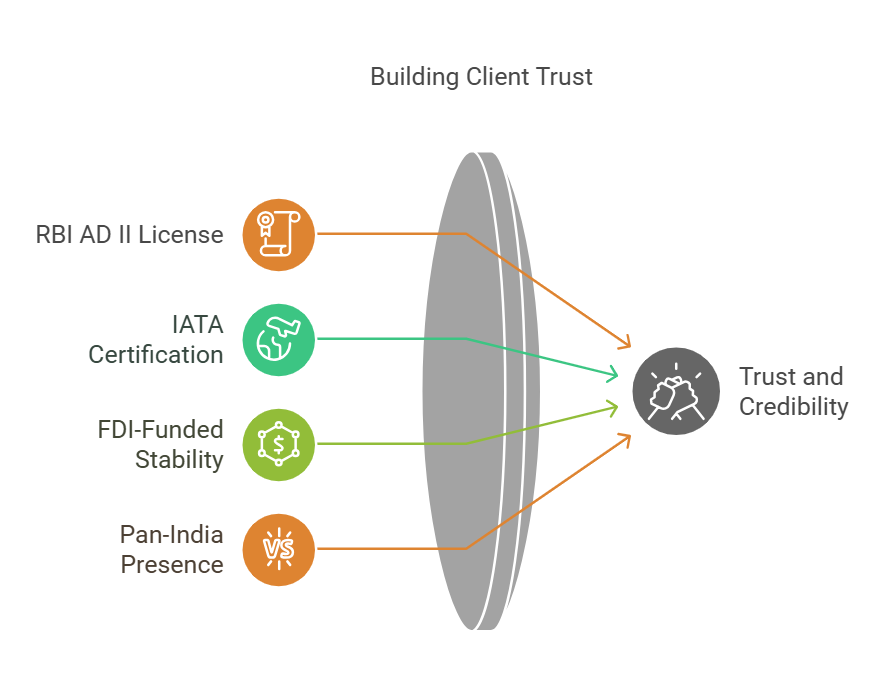
In the competitive world of forex and travel services, trust and credibility are paramount. Clients seek companies that not only provide efficient services but also adhere to strict regulatory standards. This is where Xotik Travel and Forex Pvt. Ltd. stands out, backed by its prestigious RBI-authorized Dealer Category II (AD II) license and other significant accreditations. These credentials underscore Xotik’s commitment to excellence, compliance, and customer trust.

AD 4nXckfb4orPPJuxg58ayc59YC62KmQieS6gHN S5P8JzvMrc8RWrVuLw2w7RmRwJ cjaXtgHCmJhMksIQwb1QY7qPrXlWXuITSyOjSL Muez7c8Yo5lAM 1cOY02xLAmMhRRl3XNbxw?key=BJBSzHbFdj9yvXAP4i10AHI

What is an RBI AD II License?

AD 4nXcvlT9iyLG5M50X5Mfbr03v8eBiKzp6Zxkb lQKgz709eJCGnM8 GSEiigga8imsAFsjgVFYqgfmCSETENWNq4ZpqAUQvryYalTIBVysNsOoq5jPtKwS mpLi90e8T9SCXJ4N43?key=BJBSzHbFdj9yvXAP4i10AHI

The Authorized Dealer Category II (AD II) license is a certification issued by the Reserve Bank of India (RBI) that allows companies to provide foreign exchange services within the legal framework of India’s financial regulations.

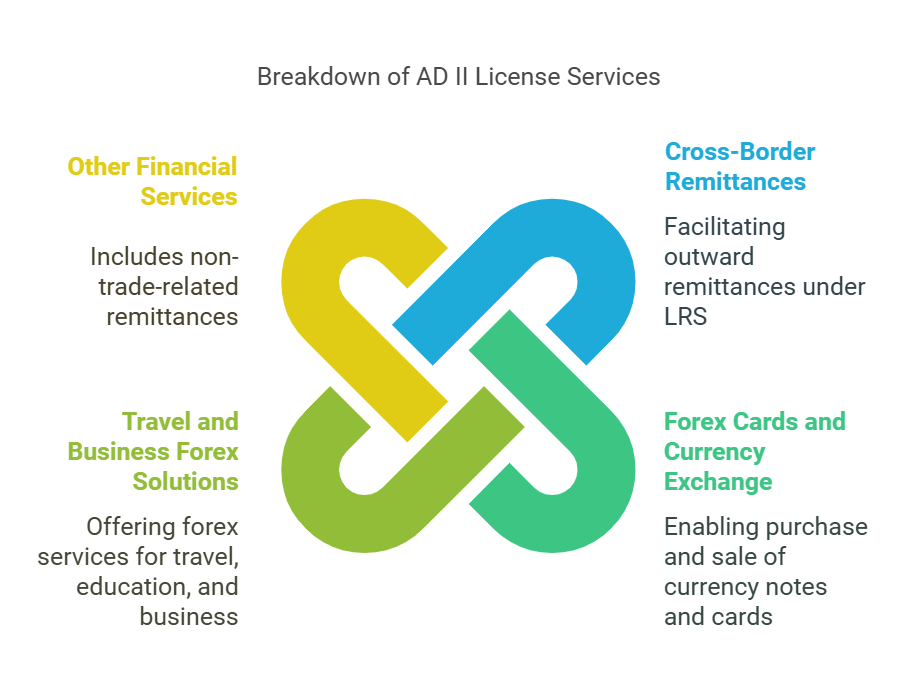
Key Services Permitted Under AD II License:

  1. Cross-Border Remittances: Facilitating outward remittances under the Liberalized Remittance Scheme (LRS).
  2. Forex Cards and Currency Exchange: Enabling the purchase and sale of destination currency notes and multi-currency forex cards.
  3. Travel and Business Forex Solutions: Offering foreign exchange services for travel, education, medical treatments, and business trips.
  4. Other Financial Services: Includes non-trade-related remittances such as gifting or personal maintenance expenses abroad.

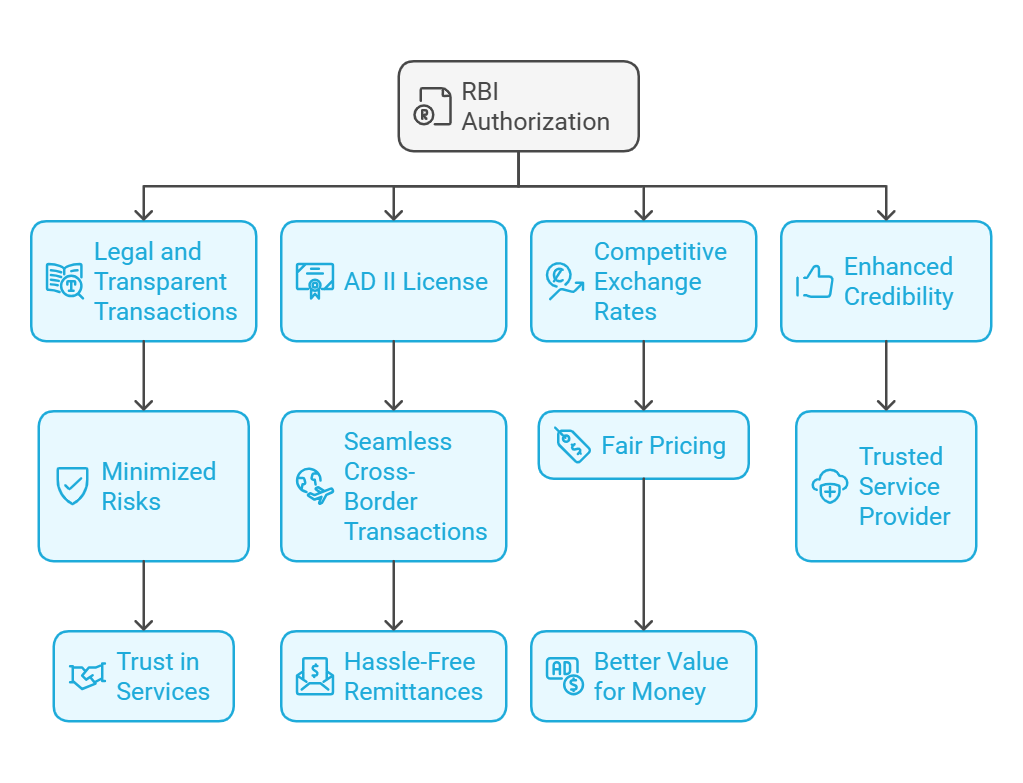
Why It Matters: The AD II license ensures that a company operates within the regulatory guidelines set by the RBI, providing a secure and trustworthy environment for clients.


How Xotik’s RBI License Benefits Its Clients

AD 4nXeihArlVLy uOJVkrTkSCyjWTlN4vLTlH1ay0A2MW7U8gD9r0YvTIsGL6fX9GZDIvZ2WzoAWsFrh RpJiRH5dSVnEF9kjl7oAym6lZRd3d0KCkbllS7jvj9amgrnidOBnUiI70EEw?key=BJBSzHbFdj9yvXAP4i10AHI

1. Compliance with Regulatory Standards

Xotik’s RBI authorization guarantees that all forex transactions are conducted transparently and legally. This minimizes risks for customers and builds trust in the company’s services.

2. Seamless Cross-Border Transactions

With an AD II license, Xotik facilitates hassle-free remittances under the LRS, allowing clients to send money abroad for education, travel, or personal needs with ease.

3. Competitive Exchange Rates

Xotik’s compliance with RBI guidelines ensures fair pricing and competitive exchange rates, providing customers with better value for their money.

4. Enhanced Credibility

Accreditations like the AD II license elevate Xotik’s standing as a trusted forex and travel service provider, giving customers peace of mind.


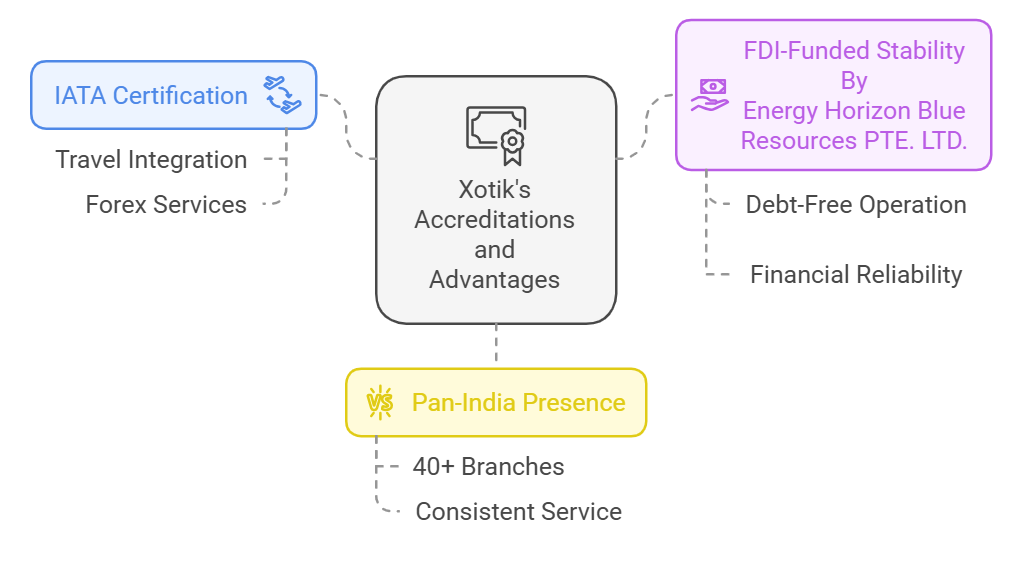
Other Accreditations That Set Xotik Apart

AD 4nXe9 moWfQnF1KXz77rDYHOHXLqnDCPt5x0mr33SdvMjiIsSHXQQGovMc5AU 7Z VjnnBTlb5SJM XGkQMWE53UN0t9hD9JtMuhvK0ZFxQgvyARZ3YjNQ87irusCaXqLOPjLbRZv A?key=BJBSzHbFdj9yvXAP4i10AHI

In addition to the RBI AD II license, Xotik holds other noteworthy accreditations:

1. IATA Certification

The International Air Transport Association (IATA) certification allows Xotik to operate in the airline ticketing business, complementing its forex and travel services.

  • Customer Benefit: This integration ensures a one-stop solution for both travel and forex needs, enhancing convenience and efficiency.

2. FDI-Funded Stability

Xotik is 100% FDI-funded, supported by Energy Horizon Blue Resources PTE. LTD. Operating with a zero-debt status, Xotik exemplifies financial stability and reliability.

3. Pan-India Presence

With 40+ branches across India, Xotik’s widespread presence ensures consistent service delivery, no matter where clients are located.


Importance of Accreditations in the Forex Industry

The forex industry deals with significant financial transactions and requires strict regulatory oversight to prevent fraud and ensure transparency.

Key Benefits of Working with Accredited Providers:

  1. Customer Safety: Accredited providers adhere to stringent compliance, ensuring secure transactions.
  2. Fair Practices: Regulatory guidelines prevent hidden charges and promote ethical practices.
  3. Global Acceptance: Certifications like IATA and RBI licenses enhance a company’s reputation globally.

Enhancing Trust Through Industry Expertise

AD 4nXdIxaSRTA0UIHzQ2bxztlof ODSja3Vnbwxdb XmSsRRs2xCIPpFokk7xQWlqVqxWU 500j0yAHbmaYBNyQsWk peYyxKls8JU0rdyS9qmMUteVLI8j8gh32vxi57yK1FEngOcNnA?key=BJBSzHbFdj9yvXAP4i10AHI

At Xotik, the emphasis on regulatory compliance and customer satisfaction is reinforced by:

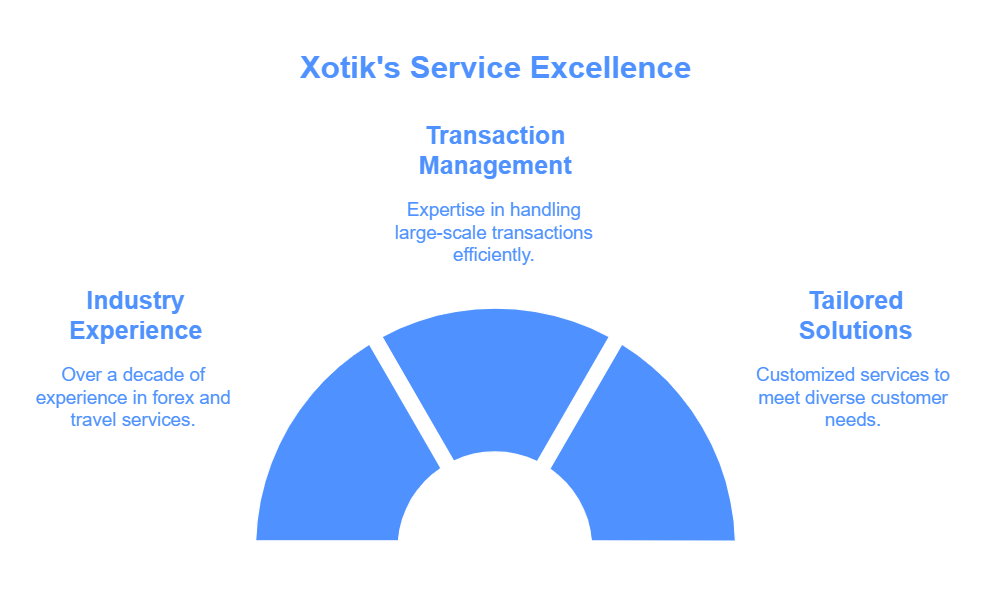
  • Over a decade of industry experience in forex and travel services.
  • Expertise in managing large-scale transactions for businesses and individuals.
  • Tailored solutions for diverse customer needs, from student forex to corporate travel.

If you’re planning your next international trip or event, learn how Xotik’s expertise simplifies the process by exploring our detailed Step-by-Step Guide to Planning International Travel.


Related Services to Maximize Your Experience

Corporate Event Solutions:

Xotik’s forex services also extend to managing forex requirements for corporate events and large gatherings. Learn more about how we simplify event planning in our blog: Understanding MICE: How Xotik Makes Events Successful.

Comprehensive Forex Services:

From multi-currency cards to competitive exchange rates, Xotik is a trusted partner for all your forex needs. Explore the full range of services at Our Forex Services.


Conclusion

Xotik Travel and Forex Pvt. Ltd.’s RBI AD II license and other accreditations underscore its commitment to regulatory compliance, customer trust, and service excellence. By choosing Xotik, clients gain access to secure, efficient, and transparent forex and travel solutions, making it a leader in the industry. Whether you need to exchange currency, send money abroad, or plan an international trip, Xotik is your trusted partner every step of the way.Ready to experience world-class forex and travel services? Visit Xotik Travel and Forex Pvt. Ltd. today!